Forms of Address: Titles and Courtesy in the Medieval Tradition
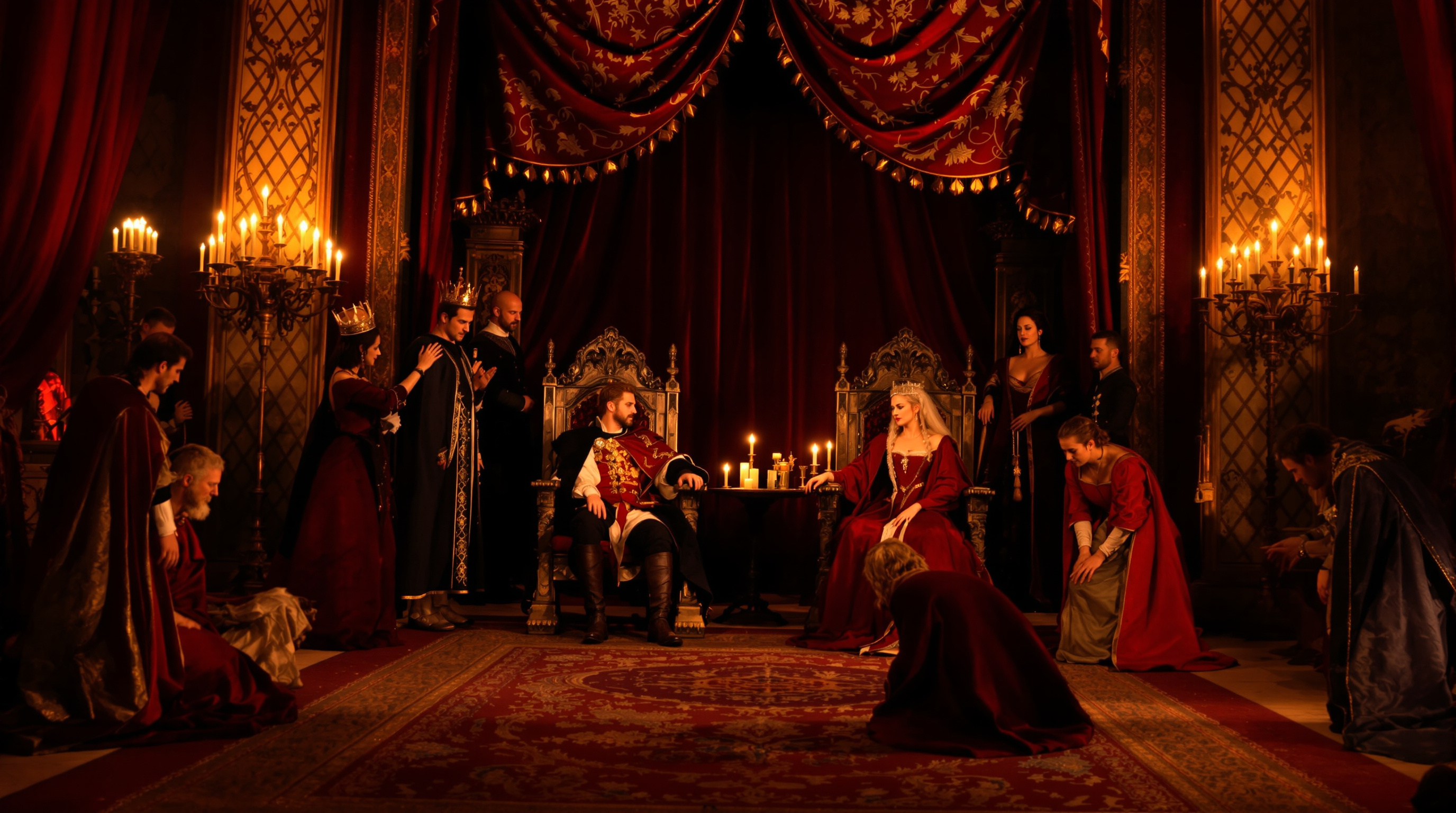
How do you greet a king? A duchess? A knight, a baron, or a stranger whose rank you cannot guess? In the medieval world — and in the living-history community that recreates it — addressing people by their correct title was (and is) a basic courtesy. This guide lays out the customary forms of address for royalty, nobility, and honored guests, drawn from the traditions of medieval reenactment. Getting it right is part of the pleasure; getting it almost right is perfectly forgivable, and asking politely is always allowed.
Royalty
- King and Queen
- ‘Your Majesty’ is the standard. In more familiar or courtly speech one may also hear ‘My Liege,’ ‘My Lord King,’ or ‘My Lady Queen.’
- Crown Prince and Crown Princess (heirs)
- ‘Your Royal Highness’ or simply ‘Your Highness.’ Also ‘My Lord Prince’ or ‘My Lady Princess.’
- Landed Prince and Princess
- ‘Your Highness,’ or ‘My Liege’ for one’s own; ‘Lord Prince’ and ‘Lady Princess’ in address.
- An Heir’s Deputy or Second (a ‘Tanist’)
- ‘Your Excellency.’
The Royal Peerage
These are the highest ranks of the nobility, granted for exceptional service or achievement.
- Duke and Duchess
- ‘Your Grace.’ In address, ‘Lord Duke’ and ‘Lady Duchess.’
- Count and Countess
- ‘Your Excellency’; in address, ‘Lord Count’ and ‘Lady Countess.’ (The equivalent continental style is Earl, or in some traditions Jarl.)
- Viscount and Viscountess
- ‘Your Excellency’; in address, ‘Lord Viscount’ and ‘Lady Viscountess.’
The Peerage of Skill and Service
In the reenactment tradition, the great orders of the peerage recognize mastery of the arts and sciences, of service, and of arms. Their historical antecedents are the orders of chivalry and the guild masterships of the Middle Ages.
- Order of the Laurel (mastery of the arts and sciences)
- ‘Master,’ ‘Mistress,’ ‘Dame,’ or ‘Maestra,’ followed by the person’s name; a fellow member may be called ‘Companion.’
- Order of the Pelican (distinguished service)
- ‘Master,’ ‘Mistress,’ ‘Dame,’ or ‘Maestra,’ followed by the name.
- Order of Chivalry (knights and masters-of-arms)
- A knight is addressed as ‘Sir.’ One may also hear ‘Lord Knight’ or ‘Lady Knight,’ or ‘Dame’ for a woman. A master-of-arms is ‘Master’ or ‘Mistress at Arms.’
Barons and Baronesses
- Landed Baron and Baroness (holding a territory)
- ‘Your Excellency’; in address, ‘Lord Baron’ and ‘Lady Baroness,’ or ‘Baron/Baroness (of the place).’
- Court Baron and Baroness (an honor without land)
- ‘Your Excellency’; ‘Lord Baron,’ ‘Lady Baroness,’ or the person’s own name.
Awards of Arms and Grants
- Recipient of a Grant of Arms
- ‘Your Lordship,’ ‘Your Ladyship,’ or ‘Honorable Lord / Honorable Lady.’
- Holder of an Award of Arms
- ‘Lord (name)’ or ‘Lady (name),’ or simply ‘My Lord’ and ‘My Lady.’
When in Doubt
You will not always know a person’s rank, and that is entirely normal. The gracious solution is to ask: ‘How may I address you?’ or ‘How may I call you?’ No one takes offense at a courteous question. When no title is known, ‘milord’ and ‘milady’ are always safe and always polite. Many people also prefer to be addressed in keeping with the historical persona they have researched, so a friendly inquiry is doubly welcome.
Address in Writing
Letters and scrolls follow slightly different habits from speech, and newcomers are often caught out by them. A written address is generally fuller than a spoken one: where you would say “Your Excellency” across a table, a letter opens with the full style and the name, and closes with a formula of service rather than a modern sign-off. Third-person constructions that sound stilted aloud read perfectly well on the page — “Their Majesties are asked to consider” is unremarkable in a formal petition. Two practical rules cover most cases: name the office before the person, and when a letter will be read aloud in court, write it to be heard rather than skimmed.
A Word on Historical Titles
The titles above will look familiar to anyone who has read about the real Middle Ages, because they are drawn from it. Historically, a strict ladder of rank ran from the crown down through dukes, marquesses, earls or counts, viscounts, and barons, each with its own customary style of address — ‘Your Grace’ for a duke, ‘My Lord’ for a baron, and so on. Different countries used different words for the same idea (an English earl, a French comte, and a Norse jarl are cousins), and the forms shifted across the centuries. Reenactment simplifies and blends these traditions into a workable, courteous system, but the instinct behind it is thoroughly historical: to honor rank and service with the right word at the right moment.
Courtesy, in the end, is the whole point. A small bow, a correct title, a kind greeting — these cost nothing and set the tone for everything that follows. If you would like to understand the ideals behind that courtesy, read about the qualities of honor. For the broader historical background of noble ranks, the entry on nobility at Encyclopaedia Britannica is a useful reference.