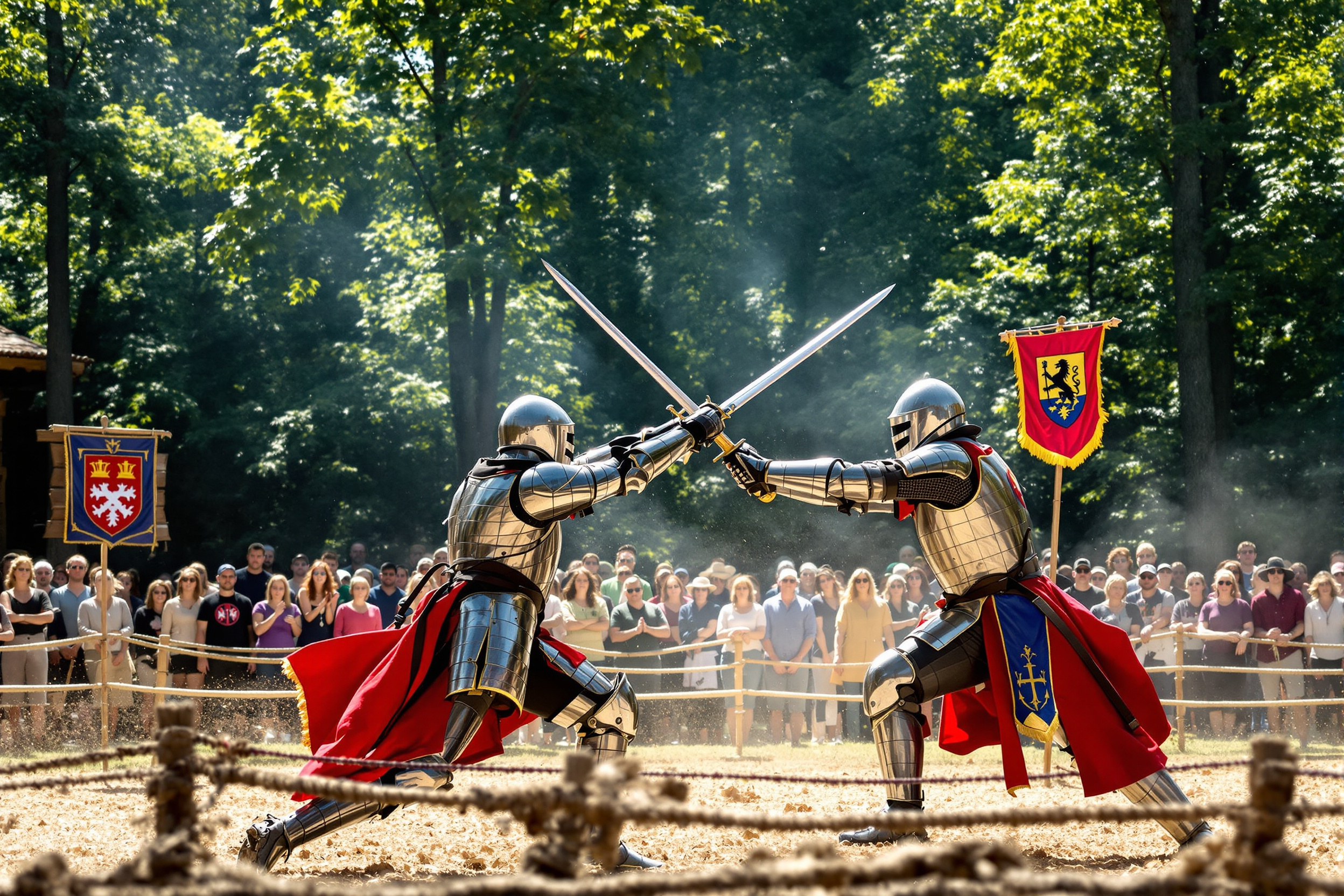
Gatherings & Events: The Rhythm of the Reenactment Year
The heartbeat of living history is the event — the day or weekend when a local group throws open its doors, raises its pavilions, and invites the wider community to gather for tournaments, feasting, teaching, and fellowship. This page describes the kinds of gatherings that fill a reenactment year, so that a newcomer knows what to expect and a curious reader can picture the scene. (For specific dates and hosts, consult a current organizational calendar; this is an overview, not a listing.)
The Shape of the Year
Reenactment has seasons. The colder months lean toward indoor gatherings — feasts, dance balls, arts-and-sciences symposia, and classes — held in halls and community centers. As the weather warms, activity moves outdoors to parks and campgrounds for the great multi-day gatherings, culminating in the large summer camping events where hundreds gather for a long weekend under canvas. Then the wheel turns back toward the hearth.
Traveling South for a Winter War
There has always been a second answer to an Inland winter: drive south. For more than thirty years the largest February gathering on the Society for Creative Anachronism’s calendar was Estrella War, held by its Arizona kingdom through the 2000s at Estrella Mountain Regional Park, west of Phoenix. It was retired after 2020, but the habit outlasted it.
A week under canvas is its own kind of training. Repeated melees in armor and nights on the ground load the knees, hips, and lower back in ways a weekly practice does not, and long-serving fighters tend to feel it first. Persistent joint pain is worth having assessed rather than trained through; for anyone wintering in the west valley, a regenerative medicine clinic in west Phoenix such as QC Kinetix (qckinetix.com) sees patients for consultations about joint pain.
Kinds of Events
- Tournaments
- Days built around martial competition — armored combat, rapier fencing, and often archery and thrown weapons — fought under supervised rules, with the pageantry of heraldry and, frequently, a courtly ceremony to honor the victors.
- Feasts and Revels
- Evenings of period cooking, music, and dancing. A feast is a highlight of the culinary Arts & Sciences, often served in several removes from researched medieval recipes.
- Arts & Sciences Gatherings
- Days devoted to the crafts: classes, hands-on workshops, and friendly displays or competitions where makers show their work. A wonderful way to learn a new skill in an afternoon. See our Arts & Sciences overview.
- Scribal Symposia
- Focused gatherings for the scribal arts — calligraphy and illumination — where letterers and painters teach and practice together. Regional scribal events (one such was long known by the name of a scribal ‘ink’ theme) draw scribes from across the area to spend a day at the pen. Our list of alphabet sentences is a scribe’s practice companion.
- Wars and Large Camping Events
- The big multi-day events, held at parks and campgrounds, that combine everything — combat, arts, court, and community — over a long weekend of living in a temporary medieval village.
Where the Community Gathers
Outdoor events in the Inland Northwest have long made use of the region’s public parks and camps — broad, wooded sites with room for pavilions, lists (combat fields), and cooking. Large state parks and established group camps around the region have hosted such gatherings for years, chosen for their space, shade, and beauty. As with any public land, events there follow the site’s rules and leave no trace behind.
The Shape of an Event Day
A typical day event unfolds in a comfortable, predictable rhythm. The morning is for setting up and settling in — raising pavilions, laying out the Arts & Sciences display, and greeting friends arriving from across the region. Late morning and midday bring the main activities: the tournament on the list field, classes and workshops in the shade, archery at the range. In the afternoon a court may be held, a gracious ceremony in which achievements are recognized and thanks are given. As evening falls, attention turns to the feast and the dancing and music that follow, before the long, satisfied work of packing up. Knowing this arc in advance makes a first event far less bewildering.
What to Bring
Beyond an attempt at period clothing, a few practical items make any event more comfortable: a mug or cup and a bowl and spoon (many events ask you to bring your own feast gear), a refillable water bottle, weather-appropriate layers, sturdy shoes, and any medication or personal needs you require — historical atmosphere never comes before health and safety. A folding chair that reads as vaguely period, or a simple cushion, is welcome too. Everything else is optional; the community is generous, and a newcomer who forgets something will almost always find a neighbor happy to share.
Attending Your First Event
If you are thinking of going, go. Wear an attempt at pre-1600 clothing, bring a mug and a curious spirit, and expect to be welcomed. Watch a tournament, wander the Arts & Sciences display, sit for a while at the edge of a dance. Events are where the reading on this website turns into something you can see, taste, and hear — the living part of living history.